

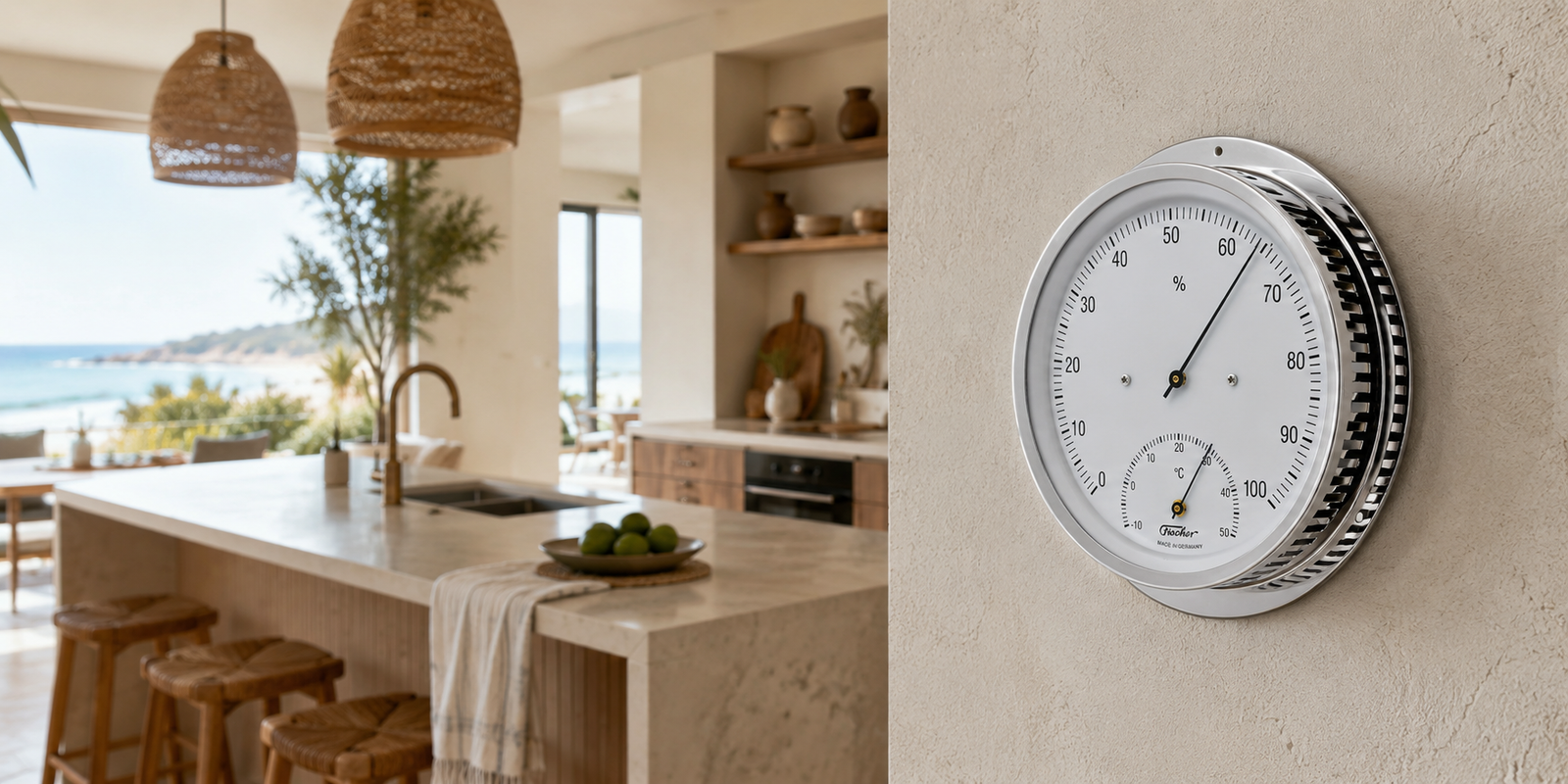

A hygrometer is an instrument that measures humidity — the amount of moisture in the air. It is sometimes called a humidity gauge or humidity meter, and it can be used in homes, offices, wine cellars, saunas, greenhouses, boats and anywhere moisture levels matter.
Humidity is easy to ignore because you cannot always see it. But when it is too high or too low, you will often feel it. High humidity can make a room feel damp, sticky or musty. Low humidity can make the air feel dry and uncomfortable. A good hygrometer gives you a clear reading, so you are not guessing.

What Does a Hygrometer Measure?
A hygrometer measures relative humidity, usually shown as a percentage. This tells you how much moisture is in the air compared with the maximum amount of moisture the air could hold at that temperature.
For example, if a hygrometer reads 55% relative humidity, the air is holding just over half of the moisture it could hold at that temperature.
In everyday terms, a hygrometer helps answer questions like:
- Is my home too damp?
- Is the air too dry?
- Could humidity be affecting my wine, timber furniture, musical instruments, artwork or books?
- Is my sauna at a comfortable humidity level?
- Do I need more ventilation, a dehumidifier or a humidifier?

What Is a Healthy Indoor Humidity Level?
As a practical guide, many homes feel most comfortable when indoor humidity sits somewhere around 40–60% relative humidity. If humidity is regularly above 60%, moisture problems can become more likely. If it is very low, the air may feel dry and uncomfortable.
There is no single perfect number for every home. Your ideal humidity level can depend on the climate, season, ventilation, insulation and how the room is used. That is why a hygrometer is so useful: it gives you a real reading from your own space, rather than relying on how the room feels.
Quick guide to humidity readings
- Below 30%: The air may feel dry.
- 40–60%: A comfortable range for many homes.
- Above 60%: The room may be getting too damp, especially if you also notice condensation, musty smells or mould.

Why Use a Hygrometer?
A hygrometer is useful because humidity affects comfort, health, storage and the condition of the things you own.
1. To Monitor Humidity at Home
In many Australian and New Zealand homes, humidity can change quickly depending on the weather, heating, cooling, ventilation and everyday activities like cooking, showering and drying laundry indoors.
A hygrometer gives you a simple way to check whether your home is sitting in a comfortable range. If humidity is too high, you may need better ventilation or a dehumidifier. If humidity is too low, a humidifier or different heating approach may help.
2. To Protect Wine in a Cellar or Wine Room
Wine storage is not just about temperature. Humidity also matters, especially if you are storing wine for longer periods.
If the air is too dry, corks can dry out. If the air is too damp, labels, timber shelving and the general cellar environment can suffer. A dedicated wine cellar thermometer and hygrometer helps you keep an eye on both temperature and humidity in one place.

3. To Use in a Sauna
In a sauna, temperature and humidity work together. A sauna that is hot and dry feels very different from a sauna with more steam in the air.
A proper sauna thermometer and hygrometer helps you check the conditions inside the sauna at a glance, so the space feels comfortable and controlled rather than guesswork.

4. To Understand Local Weather Conditions
Humidity is one part of the bigger weather picture. Many traditional weather stations combine a hygrometer with a barometer and thermometer, giving you a fuller view of local conditions.
A barometer shows changes in atmospheric pressure. A thermometer shows temperature. A hygrometer shows humidity. Together, they give you a more complete picture than any single instrument can provide alone.
Hygrometer, Thermometer or Weather Station: What Do You Need?
The right choice depends on what you want to measure.
| Instrument | What it measures | Best for |
|---|---|---|
| Hygrometer | Humidity | Homes, wine cellars, saunas, storage rooms and humidity monitoring |
| Thermometer | Temperature | Indoor and outdoor temperature readings |
| Thermometer + Hygrometer | Temperature and humidity | A simple two-in-one reading for the home, office, cellar or sauna |
| Weather Station | Usually barometric pressure, temperature and humidity | People who want a fuller picture of local weather conditions |
What Types of Hygrometers Can You Buy?
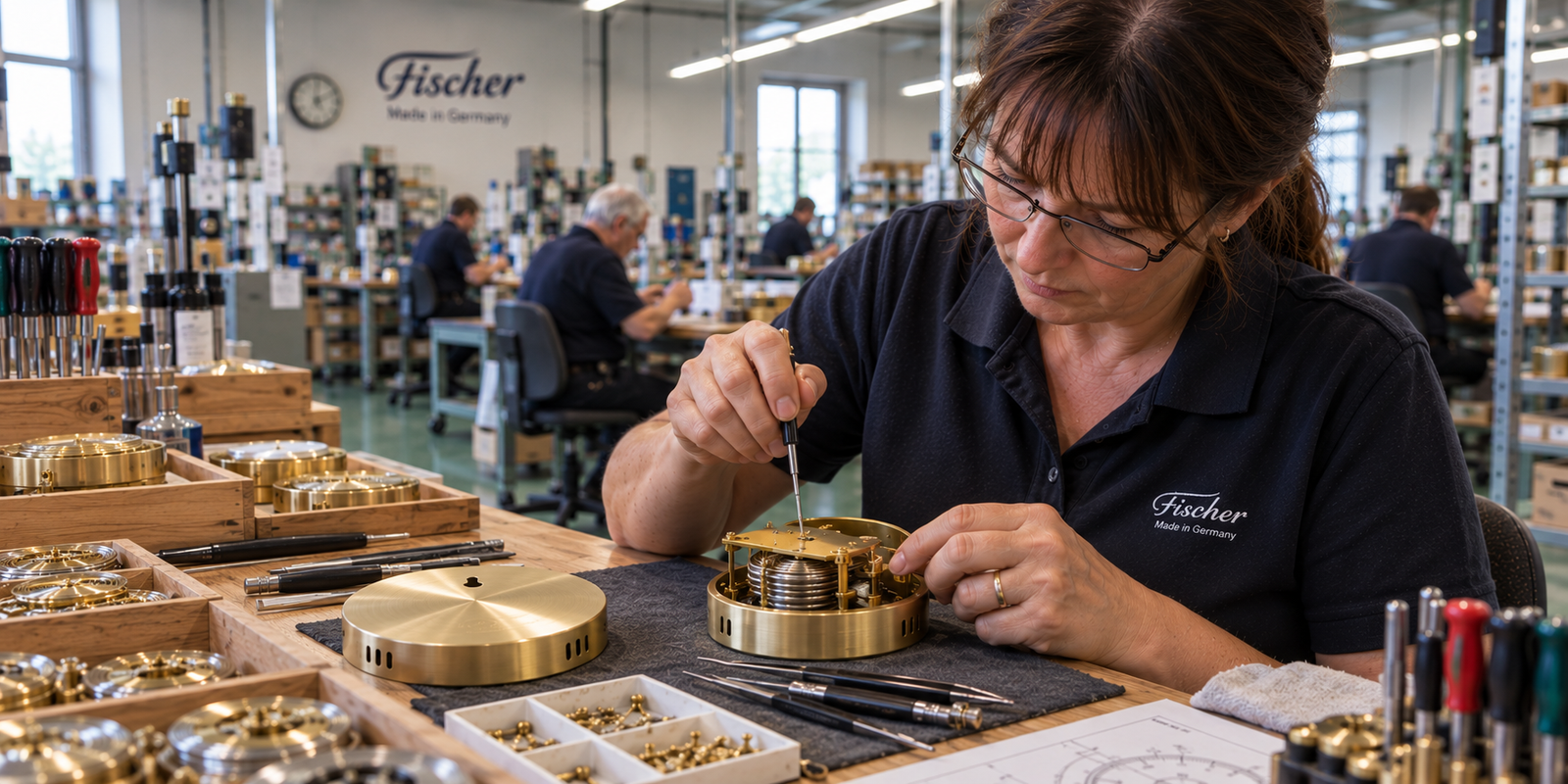
At Barometers & Clocks, we specialise in premium analogue weather instruments, including German-made Fischer and Barigo pieces. You can choose from standalone hygrometers, thermometer and hygrometer combinations, sauna instruments, wine cellar instruments and full weather stations.
Common options include:
- Standalone hygrometers for measuring indoor humidity.
- Thermometer and hygrometer combinations for checking both temperature and humidity.
- Sauna hygrometers designed for sauna environments.
- Wine cellar hygrometers for wine storage and cellar monitoring.
- Weather stations that combine a barometer, hygrometer and thermometer in one display.
Why Choose a Fischer Hygrometer?
Fischer weather instruments are made in Germany and are chosen by customers who want something more substantial than a cheap plastic gadget.
A Fischer hygrometer is a good choice if you want:
- a clear analogue dial
- quality materials
- a traditional instrument that looks right in the home
- a practical gift for someone with a wine cellar, sauna, boat, office or interest in weather
- a humidity gauge that feels like a proper instrument, not a throwaway device
For many customers, the appeal is simple: a Fischer hygrometer is useful, attractive and made to be seen.
Where Should You Place a Hygrometer?
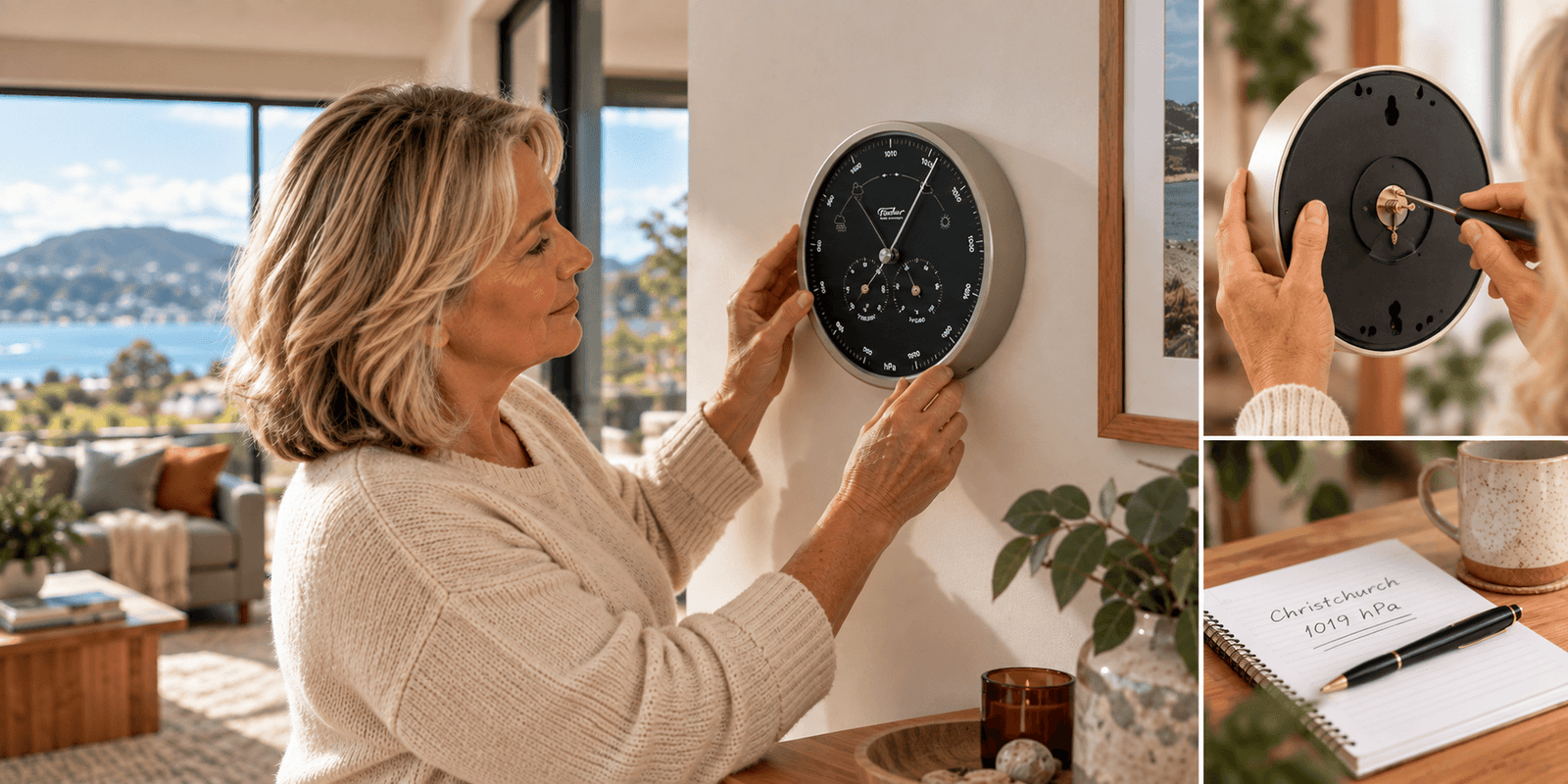
Place your hygrometer where you want to understand the actual room conditions. Avoid placing it directly beside a heater, air conditioner, open window, stove, shower or humidifier, as these can give you an extreme reading that does not represent the room properly.
For a home, a living room, bedroom, office or hallway can be a good starting point. For a wine cellar or sauna, choose an appropriate location inside the space where the reading is easy to see.
Do You Need a Digital or Analogue Hygrometer?
Digital hygrometers can be useful, especially if you want alarms or app-based monitoring. But many people prefer analogue hygrometers because they are easy to read, do not rely on a screen, and look more at home in a living room, study, wine cellar, sauna or boat.
If you want a humidity gauge that is practical and attractive enough to leave on display, an analogue hygrometer or thermometer-hygrometer combination is often the better choice.
Shop Hygrometers and Humidity Gauges
We have an extensive range of hygrometers, humidity gauges, thermometer-hygrometer combinations and weather stations available online. Orders are dispatched from our Christchurch warehouse, with delivery options available for Australia, New Zealand and worldwide customers.
Thermometer + Hygrometer
Check temperature and humidity in one easy-to-read instrument.
Wine Cellar Instruments
Monitor the conditions that matter when storing wine.
Sauna Instruments
Measure sauna temperature and humidity at a glance.
Frequently Asked Questions About Hygrometers
What is a hygrometer?
A hygrometer is an instrument that measures humidity, or moisture in the air. It is also commonly called a humidity gauge or humidity meter.
What is the difference between a hygrometer and a thermometer?
A hygrometer measures humidity. A thermometer measures temperature. Many useful home and cellar instruments combine both readings in one dial or display.
What is a good humidity level for a home?
Many homes feel comfortable around 40–60% relative humidity. If indoor humidity is consistently above 60%, it may be worth improving ventilation or looking at moisture control.
Can a hygrometer help prevent mould?
A hygrometer will not remove mould or moisture by itself, but it helps you see when indoor humidity is getting too high. That gives you a chance to ventilate, dehumidify or investigate the source of dampness before it becomes a bigger problem.
Is a humidity gauge the same as a hygrometer?
Yes. In everyday language, humidity gauge, humidity meter and hygrometer are often used to describe the same type of instrument.
Which hygrometer should I buy?
If you only want humidity, choose a standalone hygrometer. If you want temperature as well, choose a thermometer-hygrometer. For wine cellars, saunas and weather watching, choose an instrument designed for that specific use.



Leave a comment (all fields required)